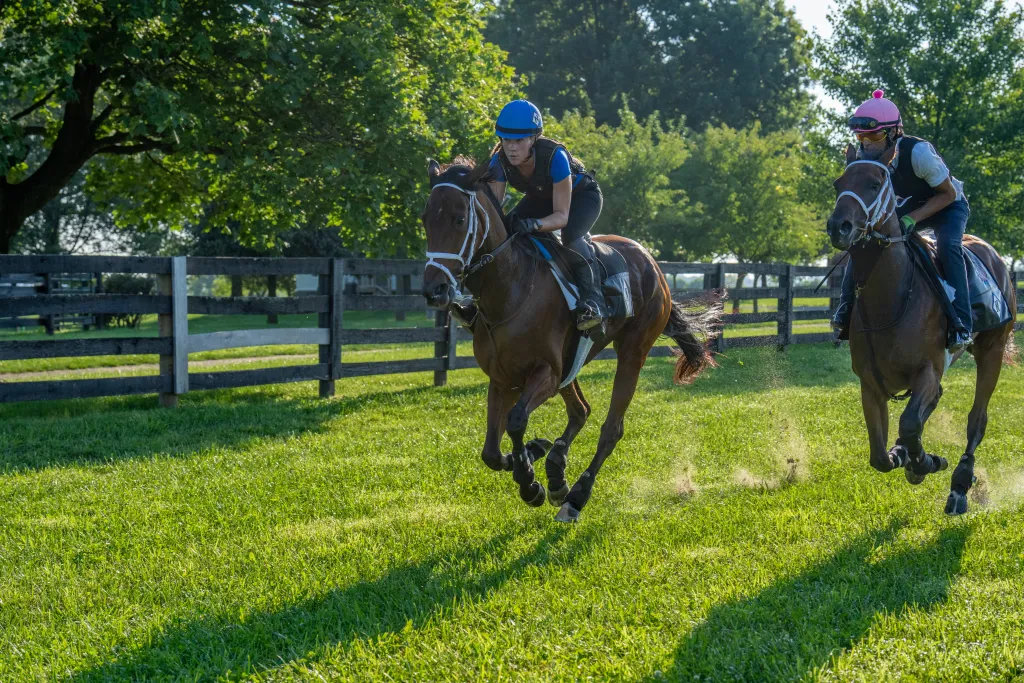
Owning a racehorse is a dream shared by many, offering the thrill of seeing your horse thunder down the track, the prestige of the winner’s circle, and the potential for winning a large purse. However, horse racing ownership is not as simple as purchasing a horse and watching it race. It involves substantial financial commitments, licensing requirements, and intricate decisions that can make the journey complex, especially for newcomers. In this guide, we’ll explore the key differences between owning a racehorse outright and participating in a syndication or partnership, and why the latter might be a better option for most aspiring horse owners.

How To Get Into Horse Racing Ownership
- Step #1: Research The Industry
- Step #2: Decide on Sole Ownership vs. Syndication
- Step #3: Set a Budget
- Step #4: Obtain An Owner License (If Not Syndicating)
- Step #5: Find The Right Horse
- Step #6: Find The Right Trainer (If Not Syndicating)
- Step #7: Enjoy The Experience
Step #1: Research The Industry
Before diving into horse racing ownership, spend time learning about the industry. Understand the different types of races, the roles of trainers, jockeys, and veterinarians, and familiarize yourself with the racing calendar. Consider attending races or speaking with current owners to gain insights.
Also, before diving into race horse ownership, it’s crucial to understand what horse racing ownership entails. Owning a racehorse means you’re responsible for the horse’s well-being, including training, veterinary care, and entering races. This comes with significant costs and responsibilities, as well as the need for a deep understanding of the racing industry.
Step #2: Decide on Sole Ownership vs. Syndication
Sole Ownership:
Sole ownership is the most straightforward but also the most demanding form of horse racing ownership. As the sole owner, you have complete control over the horse and its career. This means making decisions about which trainer to hire, which races to enter, and how to manage the horse’s health and training regimen.
The Financial Commitment of Sole Ownership
Owning a racehorse outright requires a substantial financial commitment. The initial purchase price of a racehorse can vary widely, from a few thousand dollars to several million, depending on the horse’s pedigree, age, and potential. However, the purchase price is just the beginning.
The ongoing costs of maintaining a racehorse are significant. Training fees, which cover the cost of keeping the horse at a racing stable, paying the trainer, and covering routine care, can easily run into thousands of dollars per month. In addition to training fees, there are veterinary costs, which can be unpredictable. Horses are prone to injuries, and even minor ailments can lead to expensive treatments. Regular veterinary check-ups, vaccinations, and emergency care all add to the cost.
Syndication and Partnerships: A Modern Alternative
Given the costs and complexities involved in sole ownership, many people interested in horse racing ownership choose to participate in a syndication or partnership instead. These arrangements allow you to share the ownership of a racehorse with others, significantly reducing the financial burden and operational responsibilities.
What Is a Syndication?

A syndication involves a group of individuals pooling their resources to purchase and manage a racehorse. The syndicate is usually managed by a syndicate manager, who handles the day-to-day decisions related to the horse’s care, training, and racing schedule. In return for their investment, each member of the syndicate owns a share of the horse, and any profits from racing or breeding are distributed among the members according to their shares.
Syndicates can be structured in various ways, with some offering equal shares to all members and others allowing for different levels of investment, with corresponding differences in ownership percentage and decision-making influence.
The Benefits of Syndication
-
Reduced Financial Risk: By sharing the costs of ownership with others, you significantly reduce your financial exposure. This makes it easier to manage the ongoing expenses of training, veterinary care, and other costs associated with horse racing.
-
Professional Management: Syndicates are typically managed by experienced professionals who handle the complexities of horse racing ownership. This includes selecting the trainer, managing the horse’s health, and making strategic decisions about racing. For those new to the industry, this can be invaluable, as it allows you to learn the ropes from seasoned professionals.
-
Access to Better Horses: Because syndicates pool resources from multiple investors, they often have the financial ability to purchase higher-quality horses than an individual owner could afford. This increases the chances of owning a successful racehorse.
-
Networking Opportunities: Being part of a syndicate allows you to connect with other horse racing enthusiasts, which can lead to valuable relationships and opportunities within the industry.Step #3: Set a Budget
Why Syndication or Partnerships Might Be the Better Option
For most people, especially those new to horse racing, joining a syndicate or partnership is the smarter choice. The reduced financial risk, professional management, and access to higher-quality horses make these options more appealing and practical.
Owning a racehorse through a syndicate or partnership also provides a more enjoyable experience, as you can share the highs and lows of racing with a group of like-minded individuals. The camaraderie and shared excitement of race day, combined with the lower financial stakes, make this form of ownership more accessible and less stressful.
Step #3: Set a Budget
Establish a realistic budget that includes the purchase price of the horse, ongoing training, veterinary care, and other associated costs. Remember, owning a racehorse is a significant financial commitment, so plan carefully to avoid unexpected expenses. Alternatively, horse racing syndications require a one-time investment, after which you won’t need to worry about ongoing expenses like vet fees, boarding, or training costs. This makes syndication a hassle-free and cost-effective way to enjoy horse ownership.
Step #4: Obtain An Owner License (If Not Syndicating)
Apply for an owner’s license in the jurisdiction where you plan to race your horse. The licensing process can be rigorous, requiring background checks and financial disclosures. Start this process early to ensure you’re ready to race when your horse is.
How To Obtain A Race Horse Owner’s License:
To obtain an owner’s license for a racehorse, you would need to visit the official websites of the racing authorities or commissions in the region where you plan to race. Here are some key websites based on popular racing jurisdictions:
-
United States:
- The Jockey Club: www.jockeyclub.com – Offers resources and links to various state racing commissions.
- State Racing Commissions: Depending on the state, you would visit the specific state’s racing commission website. For example:
- New York State Gaming Commission: www.gaming.ny.gov
- California Horse Racing Board: www.chrb.ca.gov
- Kentucky Horse Racing Commission: khrc.ky.gov
-
United Kingdom:
- British Horseracing Authority (BHA): www.britishhorseracing.com – This is the main body responsible for licensing owners in the UK.
-
Australia:
- Racing Australia: www.racingaustralia.horse – Provides access to licensing information across all Australian states and territories.
-
Canada:
- Canadian Pari-Mutuel Agency (CPMA): www.cpma-acmp.gc.ca – While it mainly focuses on betting, it provides links to provincial racing bodies that handle licensing.
- Ontario Racing: www.ontarioracing.com – For those racing in Ontario, this site offers specific licensing information.
Step #5: Find The Right Horse
Work with a reputable bloodstock agent or syndicate manager to find a horse that fits your budget and goals. Consider the horse’s pedigree, age, and racing potential. If you’re part of a syndicate, the group will typically select the horse, simplifying the process.
How To Find A Bloodstock Agent:
To find a reputable bloodstock agent for selecting a racehorse, you can start by visiting the Federation of Bloodstock Agents, which lists accredited agents in various regions. Additionally, the Thoroughbred Breeders’ Association provides resources and contacts for experienced professionals who can assist in purchasing a racehorse. These organizations ensure you work with qualified agents who have a deep understanding of the thoroughbred market.
Find The Right Horse Via Syndication
Resource To Find A Race Horse Trainer
Step #7: Enjoy The Experience
Attend races, celebrate the victories, and learn from the challenges. Horse racing ownership is as much about the thrill of the sport as it is about potential purse returns. By starting with a syndicate or partnership, you can share the excitement with fellow owners while minimizing risk.
Choosing the Right Path
Getting into horse racing ownership is a thrilling venture, but it requires careful consideration of the costs, responsibilities, and risks involved. While sole ownership offers the allure of complete control, it also comes with significant financial and logistical challenges. For most prospective owners, joining a syndicate or partnership offers a more manageable and enjoyable way to experience the excitement of horse racing.
By spreading the costs and responsibilities among a group, you can enjoy the thrill of ownership without the overwhelming financial and operational burden. Whether you’re drawn to the prestige of owning a horse outright or the camaraderie of a syndicate, understanding your options will help you make an informed decision that aligns with your goals and resources. For more information on how to get started, check out Tropical Racing, where you can find expert guidance and opportunities in horse racing ownership.
Ultimately, the choice between sole ownership and a syndicate or partnership will depend on your financial situation, your level of interest in the day-to-day management of a racehorse, and your appetite for risk. Whatever path you choose, horse racing ownership offers the potential for unparalleled excitement and fulfillment.