Introduction To Thoroughbred Partnerships
The allure of owning a racehorse is undeniable, but deciding between a yearling and a 2-year-old can be challenging.
Thoroughbred partnerships have exploded in popularity in recent years as a way for racing enthusiasts to participate in the excitement of horse racing without the substantial financial commitment typically required for sole ownership.
In this model, multiple investors pool their resources to buy shares in a racehorse, spreading both the costs and the risks. This collaborative approach allows participants to enjoy the benefits of ownership—such as access to exclusive events, the thrill of watching their horse race, and potential returns —without bearing the full burden of expenses like training, vet care, and boarding.
As the sport continues to modernize, the partnership model has become increasingly popular, attracting a diverse range of investors who are eager to experience the world of Thoroughbred racing, making it more accessible and financially feasible than ever before.
Benefits of Buying a Yearling
A yearling is a young horse that is officially one year old, typically ranging from 12 to 24 months of age. In the context of Thoroughbred racing, a yearling is at a stage where it has been weaned from its mother but has not yet started formal training for racing.
Purchasing a yearling offers several distinct advantages that appeal to both seasoned investors and newcomers alike. While yearlings are younger and less developed, this early stage in their lives presents unique opportunities for growth and customization that can pay off handsomely in the long run.
Lower Initial Cost
-
- Yearlings are generally less expensive than 2-year-olds.
-
- Explanation of the opportunity to potentially buy a promising horse at a lower price.
Customization of Training
-
- Owners can have input in the horse’s early training and development.
-
- Greater control over the horse’s care and preparation.
Long-Term Potential
-
- Potential for higher returns if the horse develops into a successful racehorse.
-
- The satisfaction of watching the horse grow and progress from an early stage.
Benefits of Buying a 2-Year-Old
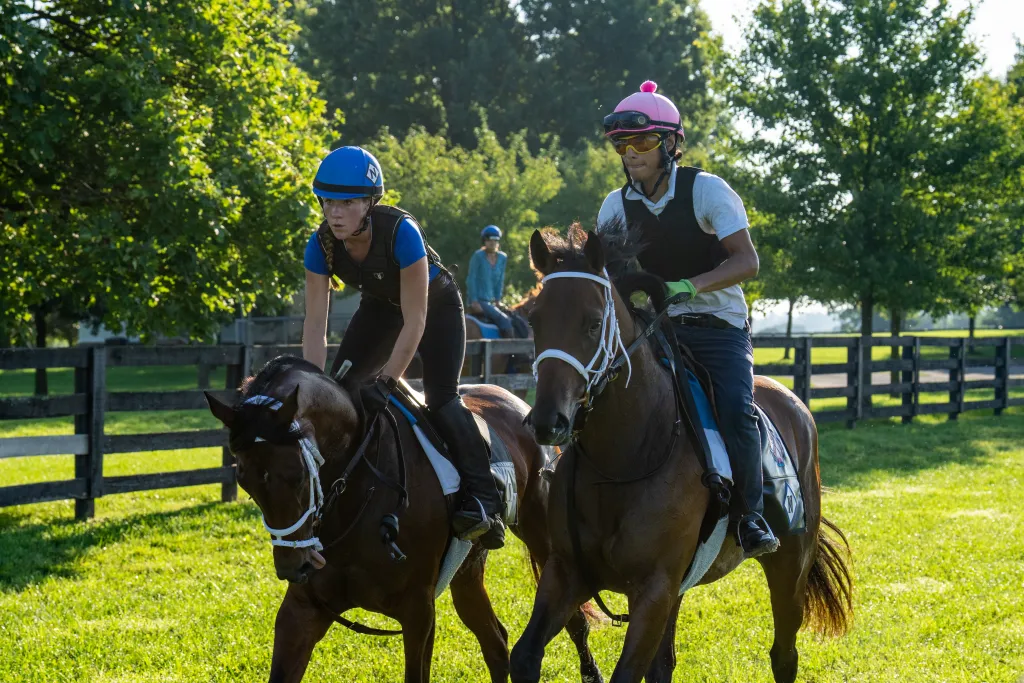
A 2-year-old horse refers to a Thoroughbred that is in its second year of life. This is a critical stage in the horse’s development, as it typically marks the beginning of formal training and, in many cases, the horse’s debut on the racetrack. At two years old, the horse is physically and mentally mature enough to begin serious training for racing, although it is still relatively young and may be in the early stages of its racing career. Two-year-olds often compete in specific races known as juvenile races, which are designed for horses of this age group.
Closer to Racing Readiness
-
- 2-year-olds are closer to their debut on the track, which means potential for quicker returns.
-
- Less uncertainty about the horse’s physical development and racing aptitude.
More Predictable & Less Risky
-
- Buyers can assess the horse’s conformation, temperament, and early training performance.
-
- Reduced risk compared to yearlings due to the more mature stage of development.
Immediate Excitement
-
- Enjoyment of watching the horse race sooner rather than waiting for a yearling to mature.
Considerations Before Making a Decision
Risk Tolerance
-
- Risk tolerance is a critical factor to consider when deciding whether to invest in a yearling or a 2-year-old Thoroughbred. Yearlings, while often more affordable, carry a higher level of uncertainty because they are still in the early stages of growth, with their racing potential largely unproven. This option may appeal to investors who are comfortable with a higher degree of risk and are willing to wait for the possibility of greater long-term rewards. On the other hand, 2-year-olds, with more developed physical attributes and early training under their belts, offer a clearer picture of their racing capabilities, making them a potentially safer bet. However, this relative safety often comes with a higher price tag. Understanding your personal risk tolerance will help guide your decision, balancing the potential for higher returns with the level of risk you are comfortable assuming in your Thoroughbred partnership.
Budget
-
- Budget considerations are very important when deciding between a yearling or a 2-year-old Thoroughbred. Yearlings generally come with a lower initial purchase price, making them more accessible for those with a limited budget. However, it’s important to factor in the ongoing costs of training, veterinary care, and maintenance, which can add up over time as the horse matures. On the other hand, 2-year-olds, while often more expensive upfront, come with the advantage of being closer to racing readiness, potentially reducing some of the long-term costs associated with raising and training a younger horse.
Conclusion
In the world of Thoroughbred racing, the decision between investing in a yearling or a 2-year-old is a pivotal one that can shape your experience and potential returns. Yearlings offer the excitement of nurturing a horse from its early stages, with the possibility of customizing its training and development to maximize future success.
On the other hand, 2-year-olds provide a more immediate opportunity to see your investment in action, with the advantage of reduced uncertainty as they are closer to racing readiness. Ultimately, the choice depends on your risk tolerance, budget, and personal goals within a partnership.
At Tropical Racing, we understand the unique appeal of both options and are here to guide you through the process, offering partnership opportunities tailored to your preferences. Whether you’re drawn to the potential of a yearling or the near-term excitement of a 2-year-old, we invite you to explore our offerings and take the first step toward experiencing the thrill of Thoroughbred racing with us.
Contact Tropical Racing today to learn more and find the perfect horse to match your vision.