In the high stakes world of horse racing, it’s easy to fixate on the horse power these animals bring to the track. But veers often, it’s the Jockey in the iron who changes everything. These riders are the ones who feel the race unfolding stride by stride and make a split second decisions that define history.
Today we highlight races and jockeys that weren’t a part of the story but they were the story:
1)George Woolf & Seabiscuit: Outsmarting a Legend (Pimlico Special, 1938)
 It was billed as the “Match of the Century”: Seabiscuit, the working-class hero of the West, against War Admiral, the imperious Triple Crown winner from the East. Over 40,000 fans packed Pimlico. Millions more listened by radio. And when Seabiscuit’s regular rider Red Pollard was injured, the call went to the cool-headed George “The Iceman” Woolf.
Woolf didn’t just ride Seabiscuit—he outthought War Admiral and his jockey from the gate. After breaking sharply, Woolf surprised everyone by letting War Admiral take the lead early, allowing Seabiscuit to settle just off his rival. Then, with surgical precision, Woolf sent the Biscuit into a powerful drive at the quarter pole, drawing level… and then surging ahead.
The underdog won by four lengths. But it wasn’t just the horse that made history that day—it was Woolf’s tactical brilliance that turned the race into legend.
2) Frankie Dettori’s “Magnificent Seven” (Ascot, 1996)
 It was supposed to be just another afternoon at Ascot. But on September 28, 1996, Italian-born jockey Frankie Dettori delivered what many believe is the greatest single-day performance in horse racing history.
He didn’t win one race.
He didn’t win two.
He won seven.
Seven rides. Seven wins. From the first race to the last, Dettori danced across the turf with electric timing and effortless flair. Bookmakers were crushed. Punters celebrated in disbelief. And Dettori? He became a living legend.
The feat was so extraordinary that it’s simply known as “The Magnificent Seven.” It transformed Frankie from a talented rider into a global icon and reminded the world that sometimes, the magic is in the saddle.
3) Victor Espinoza & American Pharoah: The 37-Year Wait Ends (Belmont Stakes, 2015)
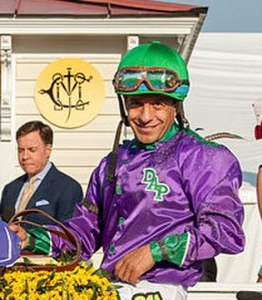 For nearly four decades, the Triple Crown felt like a ghost. Great horses came close—Silver Charm, Real Quiet, Smarty Jones—but none could conquer the grueling Belmont Stakes after wins in the Derby and Preakness.
Then came American Pharoah.
On June 6, 2015, Victor Espinoza knew he had the horse. What he needed was the ride. From the break, Espinoza seized control—boldly taking the lead and daring challengers to come. None could. With a smooth, confident hand, Espinoza kept Pharoah relaxed yet relentless.
As they turned for home, the roar at Belmont Park became deafening. Espinoza asked for more, and Pharoah gave it willingly—stretching his stride into history. He won by 5½ lengths, and the 37-year drought was over.
The world saw a great horse—but it took a fearless jockey to bring him home.
Jockey Spotlights: The Legends Behind the Reins
George “The Iceman” Woolf

- Born: May 31, 1910 – Cardston, Alberta, Canada
- Riding Style: Cool, patient, and calculating—earning him the nickname “The Iceman”
- Legacy: Woolf began his career on the rodeo circuit before turning to Thoroughbreds. He quickly gained a reputation for his nerves of steel and tactical brilliance. He wasn’t known for taking many mounts, but when he rode, he made them count. Tragically, Woolf died in a racing accident in 1946. Today, the George Woolf Memorial Jockey Award is one of the most respected honors a rider can receive—awarded annually to a jockey who exemplifies personal and professional integrity.
Lanfranco “Frankie” Dettori
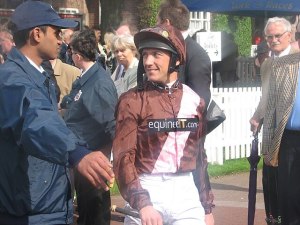
- Born: December 15, 1970 – Milan, Italy
- Riding Style: Flashy, charismatic, and fearless; known for his trademark flying dismount
- Legacy: Son of Italian jockey Gianfranco Dettori, Frankie was destined for greatness from a young age. He moved to England as a teen and became apprentice to trainer Luca Cumani. Dettori’s “Magnificent Seven” made him a household name, but he’s remained at the top for decades, winning multiple international Group 1s, including Prix de l’Arc de Triomphe and the Dubai World Cup. He’s beloved for his showmanship and longevity and is widely considered one of the greatest global jockeys of all time.
Victor Espinoza
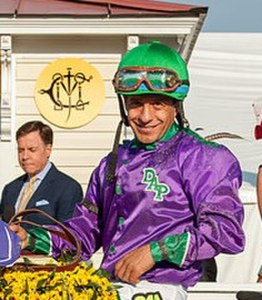
- Born: May 23, 1972 – Tulancingo, Hidalgo, Mexico
- Riding Style: Bold, aggressive gate rider with a cool head under pressure
- Legacy: One of 12 children, Espinoza grew up on a dairy farm in Mexico and drove a bus in Mexico City to pay for jockey school. He moved to California in the 1990s and steadily built his career. He became the go-to rider for Bob Baffert in key spots, riding horses like War Emblem and California Chrome to glory. But his greatest moment came aboard American Pharoah, where he became the first jockey in history to win the Grand Slam of Thoroughbred racing (Triple Crown + Breeders’ Cup Classic). Espinoza is also known for his charity work, particularly with children’s hospitals.